What is sun position for solar panels?
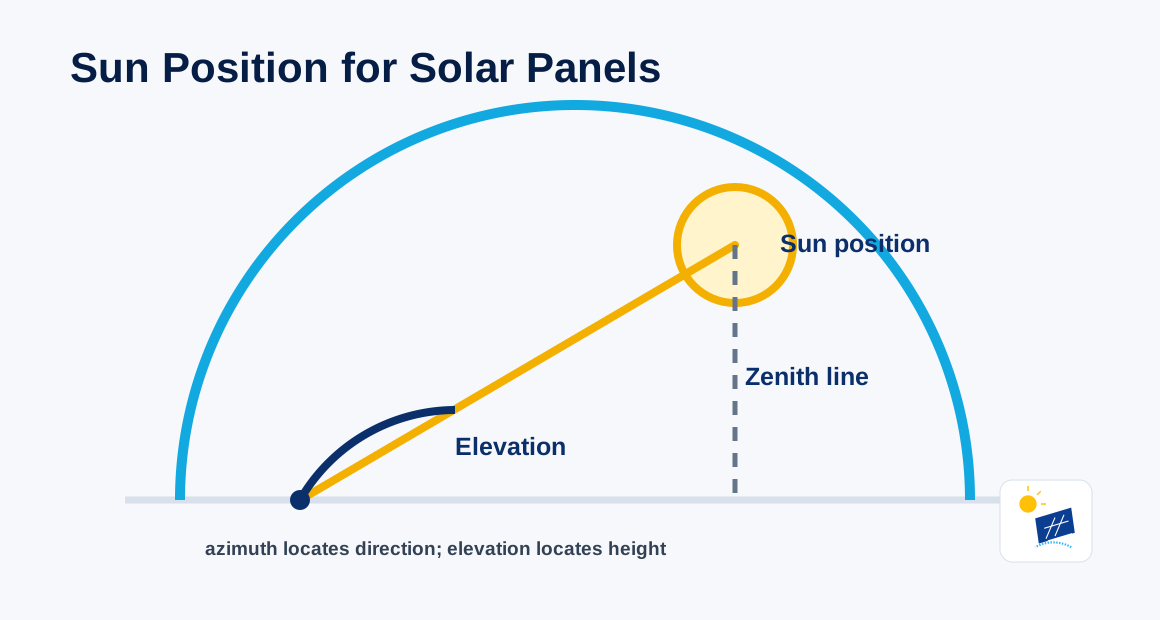
Sun position for solar panels is the location of the sun in the local sky, described by direction and height. It connects the moving sun to a fixed panel surface.
Solar position is not the same as panel angle. Solar position describes the sun. Panel angle describes the module. A panel has tilt and azimuth. The sun has solar elevation, solar azimuth, and zenith angle. Solar planning compares those two subjects.
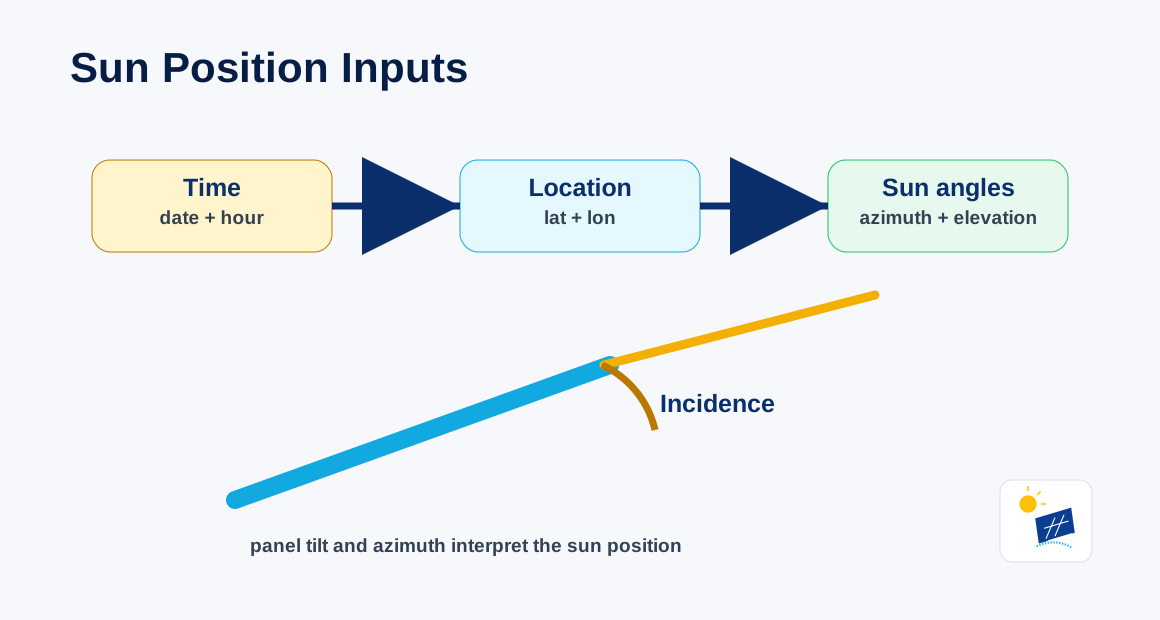
NOAA Solar Calculator uses location, date, and time to calculate solar position values. NREL's Solar Position Algorithm is built for solar radiation applications and includes solar zenith, solar azimuth, and incidence-angle calculations for tilted surfaces.
The practical reason users search this topic is clear: panel placement feels confusing until the sun's motion is separated from the panel's fixed geometry. A roof can face south, east, west, or north. The sun changes position every moment. The best decision uses both.
Which values describe sun position?
The main sun-position values are solar azimuth, solar elevation, and solar zenith. Azimuth describes direction, elevation describes height, and zenith describes distance from straight overhead.
These values form the horizontal coordinate language used by solar calculators. They do not replace a site visit, roof measurement, or shade review. They create the coordinate system that makes those checks meaningful.
What does solar azimuth show?
Solar azimuth shows the sun's compass direction. In the north-clockwise convention used by many solar tools, north is 0 deg, east is 90 deg, south is 180 deg, and west is 270 deg. That scale also matches the panel azimuth input used by PVWatts.
For solar panels, azimuth answers the direction question. It explains why a southeast roof favors morning-to-midday exposure and a southwest roof favors midday-to-afternoon exposure. It also explains why "south-facing" is a direction claim, not a tilt claim.
What does solar elevation show?
Solar elevation shows how high the sun appears above the horizon. A low elevation means the sun is near the horizon. A high elevation means the sun is higher in the sky. This value affects shadow length, panel incidence, and seasonal interpretation.
Low winter Solar Elevation Angle creates longer shadows. High summer solar elevation creates shorter shadows and changes how steeply sunlight reaches a tilted surface. A shade object that misses the array in June can block it in December.
What does solar zenith show?
Solar Zenith Angle is the angle between the sun and the point straight overhead. It is the complement of solar elevation. When elevation is 30 deg, zenith is 60 deg. When elevation is 70 deg, zenith is 20 deg.
Zenith appears often in technical solar radiation models because it describes how directly sunlight reaches the local horizontal plane. Elevation is easier for most homeowners to picture because it reads like "height above the horizon."
How does sun position change through the day?
Sun position changes through the day because the apparent sun path moves from the eastern side of the sky to the western side. Solar azimuth changes continuously, and solar elevation rises then falls.
Morning sun has lower elevation and an eastern azimuth. Around solar noon, the sun reaches its highest daily elevation. Afternoon sun moves toward western azimuth values and lower elevation. Clock noon and solar noon are not always identical because time zones and longitude shift the clock relative to the local sun.
This daily motion explains east and west roof behavior. East Facing Solar Panels receive their strongest direct exposure earlier. West-facing panels receive their strongest direct exposure later. South-facing panels in the Northern Hemisphere often center around the stronger middle arc of the day.
Sun position also explains shade timing. A tree east of an array creates a different problem than a tree west of an array. A chimney near the roof ridge creates a moving shadow whose effect changes with solar azimuth and elevation.
How does sun position change by season?
Season changes sun position by changing the height and length of the daily sun path. Summer has a higher path in many mid-latitude locations, while winter has a lower path.
NASA explains the seasons through Earth's axial tilt and the way each hemisphere receives sunlight through the year. For solar panels, that geometry appears as a changing solar path. The summer sun often climbs higher and stays above the horizon longer. The winter sun stays lower and travels a shorter arc.
Seasonal change affects both tilt and shade. A summer panel angle often uses a lower tilt because the sun is higher. A winter panel angle often uses a steeper tilt because the sun is lower. The exact recommendation depends on latitude and use case.
Winter shade deserves special attention. Low solar elevation lengthens shadows from trees, vents, dormers, parapets, hills, and neighboring buildings. A roof that looks clear at midday in summer can have a serious winter obstruction.
How does sun position guide panel direction?
Sun position guides panel direction by showing which roof surface faces the strongest part of the daily sun path. Panel azimuth works best when interpreted against local solar azimuth patterns.
In the Northern Hemisphere, fixed panels often use true south as the main reference because the sun's strongest daily arc sits toward the southern sky at many latitudes. In the Southern Hemisphere, true north plays that role. East and west surfaces remain useful when roof area, shade, pitch, or structure makes the equator-facing plane less practical.
Panel direction still needs a real roof check. A true-south roof with heavy shade can be worse than a southeast or southwest roof with clear sky. A west roof can be attractive when afternoon exposure is stronger and the east roof is blocked. North Facing Solar Panels in the Northern Hemisphere are usually a constraint case, while a north roof in the Southern Hemisphere can be the equator-facing side.
The key is matching subject to value. Sun azimuth describes the sun. Panel azimuth describes the panel. Roof azimuth describes the roof plane. They share a degree scale, but they are different entities.
How does sun position guide panel tilt?
Sun position guides panel tilt by showing how high the sun travels above the horizon through the year. Tilt changes how directly sunlight reaches the panel face.
PVWatts treats tilt as a separate input with a 0 deg to 90 deg range. That separation matters because the best direction and the best slope are not the same question. A roof can face the right direction but have a weak pitch. A roof can have a usable pitch but face the wrong direction.
A simple fixed-tilt starting point is near local latitude. Seasonal methods use lower tilt for summer and higher tilt for winter. Those rules are simplified planning baselines. Real roofs also include flush mounting, rack limits, wind exposure, row spacing, waterproofing, roof age, access, and shade.
What mistakes distort sun-position planning?
Common sun-position mistakes include mixing up sun azimuth with panel azimuth, using magnetic direction as true direction, ignoring season, and checking shade at only one time.
A compass reading can point to magnetic north. Solar geometry uses true direction tied to geographic coordinates. A user who enters magnetic direction into a true-azimuth calculator can shift the result.
A second error is treating noon shade as full-day shade. Morning and afternoon shadows follow different paths. A solar-position check needs date and time because the sun's azimuth and elevation change continuously.
A third error is reading sun position as a production guarantee. Sun position is geometry. Production also depends on irradiance, weather data, module characteristics, losses, inverter behavior, and system design. PVWatts includes more inputs and outputs when modeling energy, including plane-of-array irradiance and AC output fields.
How do you use a sun-position result?
Use a sun-position result to compare roof planes, mark shade risk, choose a panel direction, and understand why seasonal tilt changes.
Start with location, date, and time. Read solar azimuth and elevation. Compare the sun's direction to the roof or panel direction. Check whether shade objects sit between the sun and panel during important exposure windows. Repeat the check for summer, winter, morning, midday, and afternoon.
The clean workflow is: identify the roof plane, measure true azimuth, measure tilt, inspect shade, then compare those values to the sun position. That gives a real planning answer instead of a generic compass answer.
Source Notes
- C001-C005: NREL PVWatts V8 documents tilt, azimuth, array type, location, and output fields.
- C004: NREL Solar Position Algorithm documents solar zenith, azimuth, and incidence-angle calculations.
- C008: NOAA Solar Calculator provides solar position from location, date, and time.
- C011-C012: NASA and site methodology support season and tilt context.