What is solar azimuth?
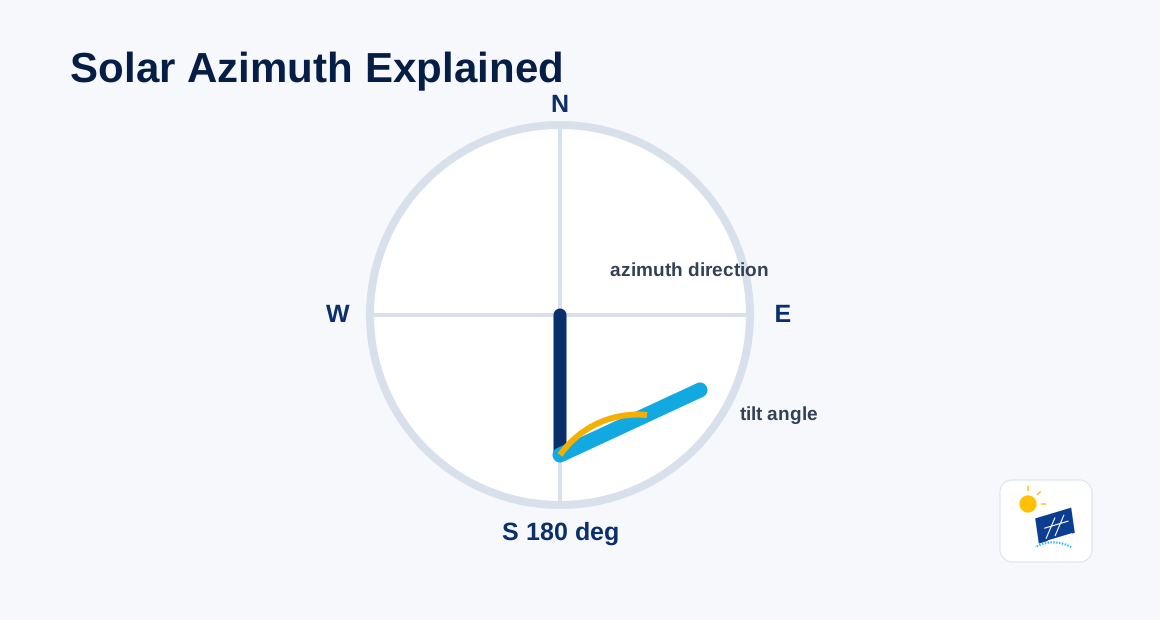
Solar azimuth is the sun's compass direction measured around the horizon. In solar panel planning, azimuth also describes the compass direction of the panel face or roof plane.
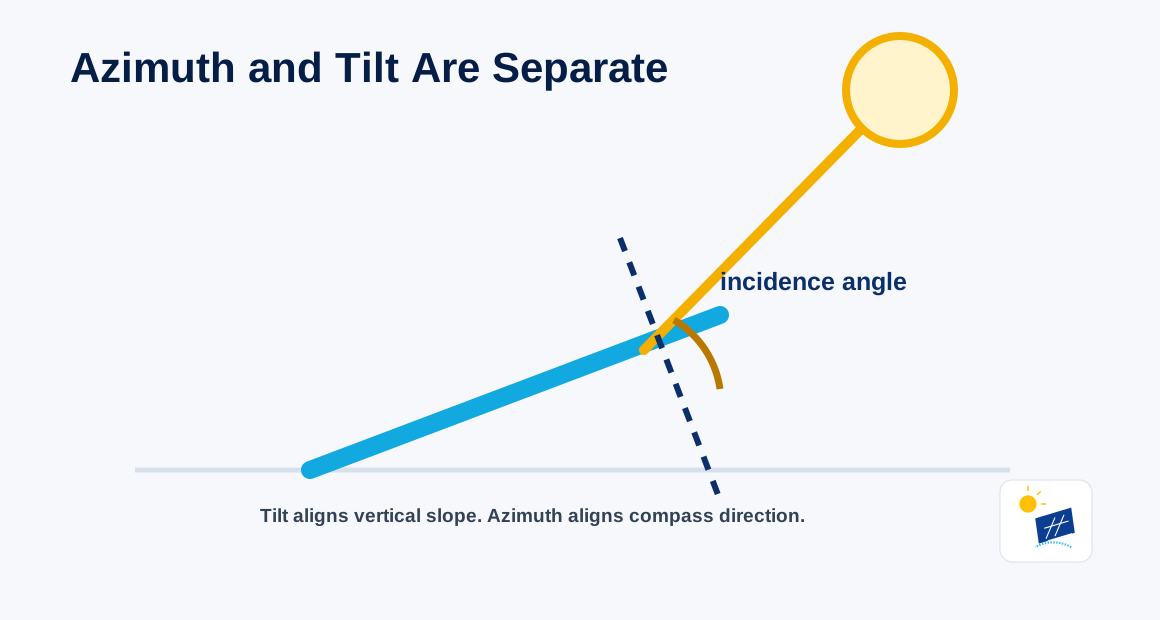
Solar azimuth is a horizontal angle. The term belongs to direction, not steepness. Solar panel tilt measures the vertical angle from horizontal. Solar azimuth measures the compass bearing around the horizon. A complete panel-orientation answer uses both tilt and azimuth.
According to NREL PVWatts documentation, azimuth is a PV input with valid values from 0 deg to less than 360 deg. That range uses a full compass circle. The value marks the direction the array faces.
Solar azimuth has 2 common meanings in solar planning. Sun azimuth describes the sun's current compass position. Panel azimuth describes the direction the panel face points. The strongest planning result compares both entities: where the sun travels and where the panel is aimed.
How is solar azimuth measured?
Solar azimuth is measured in degrees around the horizon, usually from true north. The degree value identifies compass direction, while solar elevation identifies the sun's height above the horizon.
A solar azimuth reading uses a circular scale. The circle starts at true north, moves clockwise through east and south, and returns to north near 360 deg. This convention matches common solar calculators and PV modeling tools.
NOAA Solar Calculator provides solar position values by place, date, and time. Those values let a user connect a roof direction with the sun's path for a specific location and date. The azimuth value changes during the day because the sun moves across the sky.
What does 0 deg, 90 deg, 180 deg, and 270 deg mean?
The 4 cardinal azimuth values define the compass scale. A 0 deg azimuth points true north. A 90 deg azimuth points true east. A 180 deg azimuth points true south. A 270 deg azimuth points true west.
Panel azimuth uses the same directional logic. A south-facing roof in the Northern Hemisphere often sits near 180 deg. An east-facing roof sits near 90 deg. A west-facing roof sits near 270 deg. A north-facing roof sits near 0 deg or 360 deg.
How is solar azimuth different from panel azimuth?
Solar azimuth describes the sun's direction at a given time. Panel azimuth describes the direction of the panel surface. The first value moves through the day. The second value stays fixed unless the array tracks or turns.
This distinction matters because a panel is not aimed at one sun position for the entire day. A fixed panel uses a compass direction that balances the local sun path. A tracker changes direction or angle mechanically, so tracker orientation belongs to a different system type.
Why does solar azimuth matter for solar panels?
Solar azimuth matters because panel direction determines which part of the sun path the array faces. Tilt controls slope, but azimuth controls whether the panel points toward morning, midday, afternoon, or the opposite direction.
Solar panels receive more direct sunlight when the panel face aligns with the usable sun path. In the Northern Hemisphere, True South often aligns fixed panels with the strongest daily arc. In the Southern Hemisphere, true north plays that role. East Facing Solar Panels emphasize morning sun. West-facing panels emphasize afternoon sun.
Azimuth also changes how roof planes are evaluated. A roof can have a strong tilt angle and a weak direction. A roof can also have a workable direction and a tilt mismatch. The best site interpretation checks both values instead of replacing one with the other.
NREL PVWatts treats tilt and azimuth as separate inputs. That separation is important. A calculator that asks for only tilt cannot fully describe orientation. A calculator that asks for only direction cannot describe panel slope.
Azimuth also decides which query a user is really asking. "Best direction for solar panels" asks for the panel surface azimuth. "Where is the sun right now" asks for sun azimuth. "What direction is my roof" asks for roof azimuth. "What value goes in PVWatts" asks for array azimuth. These 4 query states share the same degree scale, but each one uses a different entity as the subject.
The practical distinction matters for roof decisions. A southeast roof and a southwest roof can both be workable direction candidates, but the timing of sunlight differs. A southeast-facing roof receives more morning sun. A southwest-facing roof receives more afternoon sun. A true-south roof centers the fixed panel direction around the middle of the daily sun path in many Northern Hemisphere locations.
How does solar azimuth connect to tilt, elevation, and incidence angle?
Solar azimuth connects to tilt, elevation, and incidence angle by locating the sun horizontally while the other values describe height, panel slope, and the sunlight-to-surface relationship.
Solar Elevation Angle is the sun's height above the horizon. Solar azimuth is the sun's compass direction around the horizon. Panel tilt is the panel slope from horizontal. Incidence angle is the angle between incoming sunlight and the line perpendicular to the panel surface.
According to NREL Solar Position Algorithm research, solar-position calculations use zenith, azimuth, and incidence-angle relationships for tilted surfaces. The terms are connected because the sun has both vertical and horizontal position, while the panel also has both vertical slope and compass direction.
The relationship explains why one angle is not enough. Tilt alone cannot describe whether the panel faces east, south, west, or north. Azimuth alone cannot describe whether the panel is flat, moderately tilted, or vertical. Incidence angle brings both directions together by describing how directly sunlight reaches the surface.
The following table separates the 4 geometry entities that users often mix:
| Entity | What it measures | Example value | Planning role |
|---|---|---|---|
| Panel tilt | Slope from horizontal | 35 deg | Sets vertical panel angle |
| Panel azimuth | Compass direction of panel face | 180 deg | Sets horizontal panel direction |
| Solar elevation | Sun height above horizon | 45 deg | Describes vertical sun position |
| Solar azimuth | Sun compass direction | 210 deg | Describes horizontal sun position |
This separation reduces wrong calculator entries. A user entering 35 deg as azimuth has entered a roof slope as a compass direction. A user entering 180 deg as tilt has entered south-facing direction as vertical slope. Solar calculators require each value in the correct field.
What mistakes cause wrong azimuth readings?
Wrong azimuth readings come from mixing true and magnetic direction, confusing azimuth with tilt, measuring the roof from the wrong side, ignoring hemisphere, and treating sun azimuth as fixed.
True direction and magnetic direction are different in many places. A phone compass or handheld compass often points to magnetic north unless corrected. Solar orientation uses true azimuth because the sun path is tied to Earth's rotation and geographic coordinates, not the local magnetic field.
Tilt confusion is another common error. A roof pitch of 30 deg is not an azimuth. A south-facing roof near 180 deg is not a tilt value. Roof pitch and panel tilt are vertical. Azimuth is horizontal.
Roof-side confusion changes the answer by 180 deg. The roof face with panels is the measured surface. Measuring the opposite roof plane gives the opposite azimuth. A gable roof can have one plane facing southeast and the other facing northwest.
Hemisphere confusion changes the preferred direction. Northern Hemisphere fixed arrays generally look toward true south. Southern Hemisphere fixed arrays generally look toward true north. Equatorial and special-site cases require local sun-path review rather than a universal compass rule.
Sun-azimuth confusion treats the sun's direction as constant. The sun's azimuth changes across the day and season. Panel azimuth is the chosen surface direction. The planning task is matching the fixed or moving surface to the usable sun path.
Phone-compass readings add another failure path. A phone can display magnetic direction, true direction, or a sensor-influenced bearing depending on app settings and calibration. Metal roofing, vehicles, tools, electrical equipment, and nearby steel can disturb compass readings. A map-based roof check or a corrected compass reading gives a cleaner azimuth input than a single unverified phone reading.
Average-azimuth searches create another error. A user can search for average solar azimuth for a city, but solar azimuth is time dependent. The sun's azimuth changes from sunrise to sunset and shifts by season. A fixed panel azimuth is the chosen surface direction, not the average of every sun position.
How do you use solar azimuth in planning?
Solar azimuth is used by measuring the roof or panel direction, correcting compass readings to true direction, comparing the value with the local sun path, and entering the final azimuth into a calculator or PV model.
The planning sequence starts with the surface. Identify the roof plane or rack face that will hold the panel. Measure its direction on a map, roof plan, or corrected compass. Convert magnetic bearings to true bearings when a compass is used.
The second step is separating surface azimuth from sun azimuth. Surface azimuth is the panel direction. Sun azimuth is the solar position at a time. NOAA Solar Calculator gives solar position by location and time, while PVWatts uses array azimuth as a fixed model input for fixed systems.
The third step is checking constraints. Shade, roof geometry, obstructions, and available roof planes control the usable direction. A perfect-looking azimuth value loses value when the panel surface is shaded or unavailable.
The final step is calculator entry. Enter the true panel azimuth, not magnetic compass direction, when a tool asks for solar orientation. The output then describes direction in the same coordinate system used for solar position.
Solar azimuth planning also needs a boundary. The azimuth value does not approve a roof plane by itself. A roof can point near true south and still have vent obstructions, dormer shade, tree shade, setback limits, or an unsuitable mounting area. A roof can point southeast or southwest and still be the more practical option when the centered roof plane is shaded or unavailable.
The strongest use of azimuth is comparison. Compare available roof planes by true direction, then compare their tilt, shade, surface area, and access. This comparison turns a compass value into a planning decision. Azimuth supplies the horizontal geometry; the site review supplies the physical constraints.
Sources: NOAA Solar Calculator · NOAA World Magnetic Model