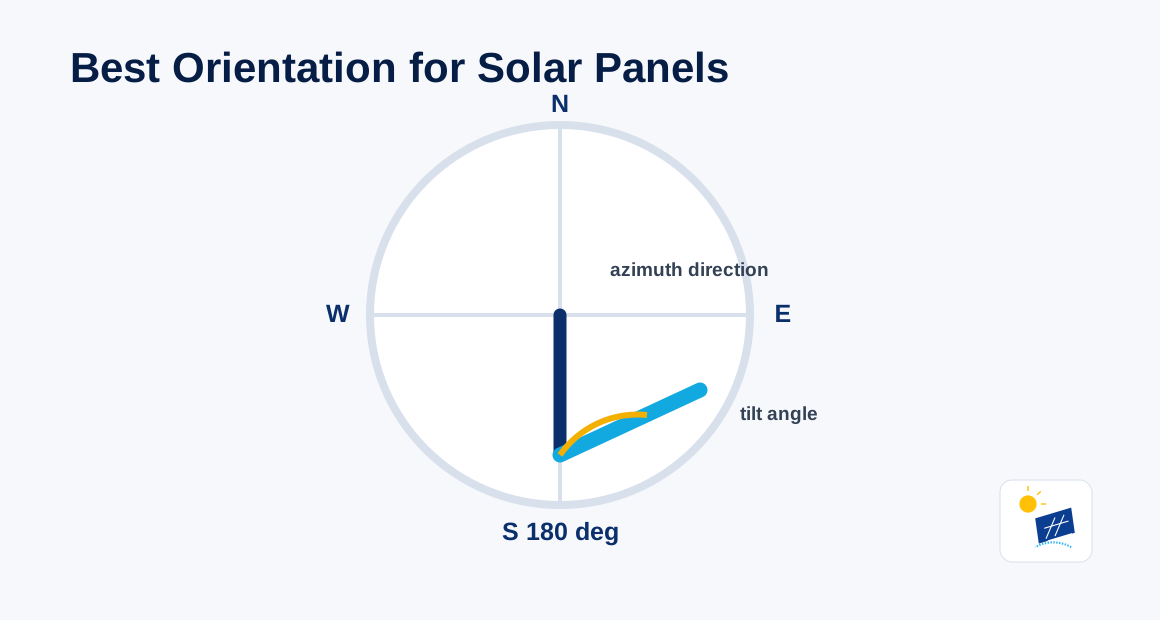
What is the best orientation for solar panels?
The best orientation for solar panels combines equator-facing azimuth with a usable tilt angle. Northern Hemisphere panels generally face true south, while Southern Hemisphere panels generally face true north.
Solar panel orientation has 2 parts. Tilt measures slope from horizontal. Azimuth measures compass direction. According to NREL PVWatts documentation, tilt is a separate input from azimuth, and azimuth uses a 0 deg to less than 360 deg range.
Best orientation is site-specific. The compass target matters, but the roof must also have usable area, low shade, workable pitch, and safe access. DOE Energy Saver guidance connects solar planning to sunlight reaching the site and system characteristics.
How do tilt and azimuth work together?
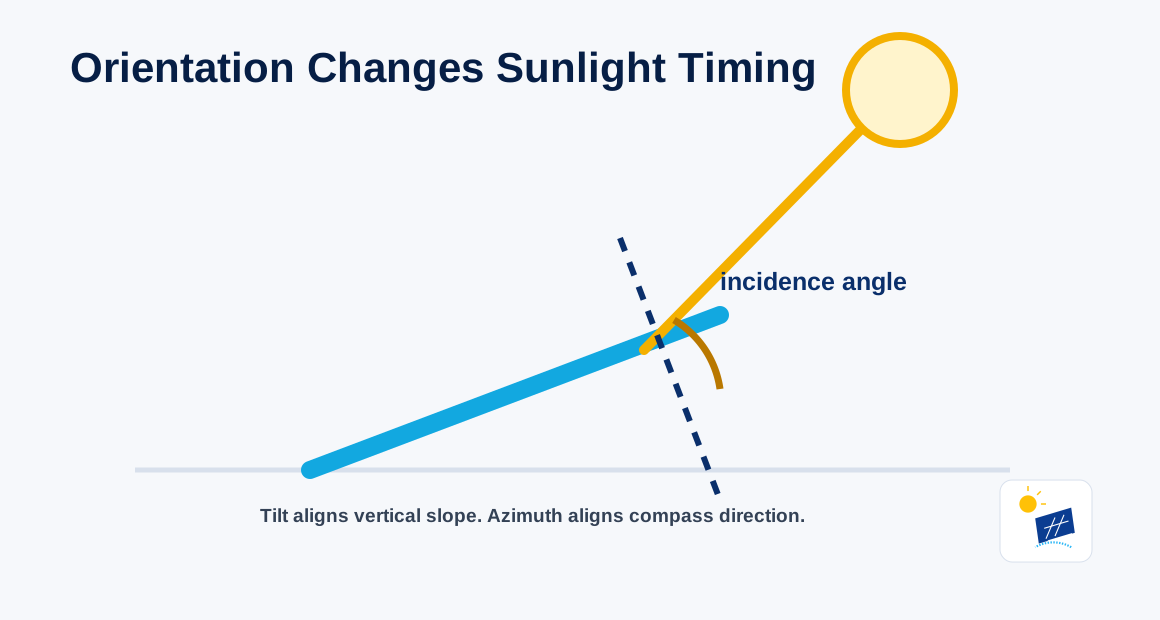
Tilt and azimuth work together because tilt aligns the panel vertically with solar elevation, while azimuth aligns the panel horizontally with the sun path. Orientation is incomplete without both values.
Solar Panel Orientation is a paired geometry problem. A panel can have a strong tilt and weak compass direction. A panel can have a strong compass direction and weak roof slope. The best site reading compares both values before judging the surface.
What does tilt control?
Tilt controls the panel angle from horizontal. A flat panel has 0 deg tilt. A vertical panel has 90 deg tilt. Fixed tilt starts near latitude, while summer tilt is flatter and winter tilt is steeper under the site method.
Tilt connects to incidence angle. According to NREL Solar Position Algorithm research, tilted-surface calculations use incidence-angle relationships. Incidence angle describes how directly sunlight reaches the panel face.
What does azimuth control?
Solar Azimuth controls panel compass direction. A common azimuth convention uses 0 deg for north, 90 deg for east, 180 deg for south, and 270 deg for west. NREL PVWatts accepts azimuth values from 0 deg to less than 360 deg.
Azimuth changes the time pattern of sunlight. East Facing Solar Panels receive more morning sun. West-facing panels receive more afternoon sun. South-facing panels in the Northern Hemisphere center the fixed orientation around the main daily sun path.
Which direction works by hemisphere?
Panel direction works by hemisphere because fixed panels generally face the equator-side sun path: true south in the Northern Hemisphere and true north in the Southern Hemisphere.
The hemisphere rule follows the sun path. Northern Hemisphere sites see the main daily arc to the south. Southern Hemisphere sites see the main daily arc to the north. NASA Space Place explains that Earth's tilt creates opposite seasons between hemispheres, and the same geography creates opposite direction references.
True direction matters. A magnetic compass reading can differ from true direction. Solar calculators use geographic direction because solar position depends on location, date, and time. NOAA Solar Calculator provides solar position by place, date, and time.
Equatorial locations need local review. Very low-latitude sites can have sun paths that shift north and south during the year. The equator-side rule is still a useful starting point, but local solar-position data gives the cleaner orientation check.
What direction fits the Northern Hemisphere?
Northern Hemisphere fixed panels generally use True South because the main sun path sits toward the southern sky. A true-south azimuth often sits near 180 deg in a north-based compass system. The exact roof plane still needs measurement because "south-facing" in casual language can mean southeast, south, or southwest.
The direction value needs true north reference. A magnetic compass can show a bearing that differs from true direction. A map bearing or corrected compass reading gives a cleaner solar azimuth input.
What direction fits the Southern Hemisphere?
Southern Hemisphere fixed panels generally use true north because the main sun path sits toward the northern sky. A true-north azimuth often sits near 0 deg or 360 deg in a north-based compass system. Seasonal timing also reverses across the equator.
The same orientation logic still applies. Measure azimuth, measure tilt, check shade, then compare surfaces. Hemisphere changes the preferred direction; it does not remove the need for roof and shade review.
When is the best direction not available?
The best direction is not available when the ideal roof face is shaded, too small, structurally unsuitable, blocked by obstructions, or pointed away from the usable mounting area.
Roof constraints often decide the practical orientation. Chimneys, dormers, vents, skylights, ridges, setbacks, trees, and adjacent buildings change the usable surface. A true-south plane with heavy shade can be weaker than a southeast or southwest plane with clearer sunlight.
Roof Pitch also changes orientation quality. A roof can face the right compass direction while using a slope that differs from the target tilt. Flush-mounted panels follow the roof pitch. Tilt racks can change the panel plane, but they add wind, attachment, and access questions.
Array type changes the answer. According to NREL PVWatts documentation, array type includes fixed roof mounted, fixed open rack, 1-axis, and 2-axis systems. A tracker solves orientation differently from a fixed roof plane.
How do you choose an orientation?
Solar panel orientation is chosen by measuring true azimuth, measuring tilt or roof pitch, checking shade, then comparing available roof or rack surfaces with a solar orientation calculator.
The practical workflow uses 5 checks:
- Measure the panel or roof azimuth.
- Measure roof pitch or selected rack tilt.
- Identify hemisphere and true direction.
- Check shade across the sun path.
- Compare the result in PVWatts or installer software.
The best orientation is not a single compass word. "South" is useful only when it means true south, a measurable azimuth, a usable roof plane, low shade, and a workable tilt. The final orientation is the surface that best combines direction, slope, sunlight access, and physical constraints.
How do you compare two roof planes?
Roof-plane comparison uses the same inputs for each surface. Measure azimuth, roof pitch, available area, and shade for plane A. Measure the same values for plane B. The better orientation is the usable surface with the stronger combined geometry and fewer constraints.
A southeast plane and southwest plane can both be practical. The southeast plane emphasizes morning sunlight. The southwest plane emphasizes afternoon sunlight. The final answer depends on shade timing, roof area, and site goals.
How does orientation connect to performance modeling?
Orientation connects to performance modeling through tilt and azimuth fields. PVWatts accepts both values as separate inputs and returns model outputs such as plane-of-array irradiance and AC output. The model uses orientation as one part of a larger input set.
The orientation result is therefore a measured input, not a standalone forecast. A strong measured orientation improves the quality of the model entry. Final planning still uses location, weather data, losses, array type, and site assessment.
What examples show the best orientation?
Best orientation examples show that true south is a strong starting point in the Northern Hemisphere, but roof shade, roof pitch, and available space can change the usable surface.
A true-south roof at 35 deg tilt with little shade is a clean fixed-panel candidate in many Northern Hemisphere locations. The surface aligns direction and slope well enough for a straightforward orientation check. The next step is site review and model entry.
A southwest roof at 28 deg tilt can be more practical than a shaded true-south roof. The southwest roof changes the daily sunlight pattern, but clearer sky access can make the surface more usable. Orientation selection compares available surfaces rather than selecting a compass word in isolation.
An east-facing roof can be practical when the south or west surfaces are blocked. The east plane emphasizes morning sunlight and needs calculator comparison. The label "east-facing" is incomplete until the true azimuth, tilt, shade, and usable roof area are measured.
A ground mount creates the cleanest orientation choice because the rack can be aimed independently of roof planes. The ground mount still needs shade, row spacing, soil or foundation review, and access checks. More control over azimuth does not remove site constraints.
Orientation examples also show why a single "best" direction is not enough. The best direction is the measured surface that keeps tilt, azimuth, sunlight access, and mount constraints in the same decision. A good orientation answer names the compass direction, the slope, and the reason that surface is usable.
Source Notes
- C001-C003: NREL PVWatts V8 documents tilt, azimuth, and array type inputs.
- C007-C008: NREL Solar Position Algorithm and NOAA Solar Calculator define solar-position geometry.
- C009-C012: DOE, NASA, and site methodology define site review, sunlight access, hemisphere, and seasonal tilt.