What is solar incidence angle?
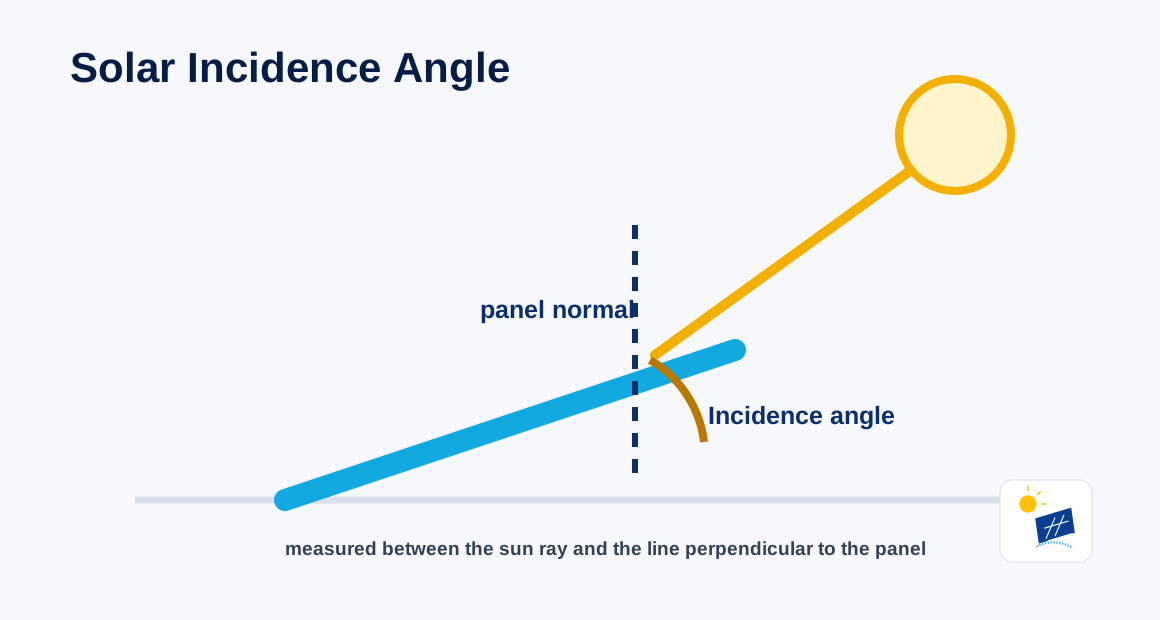
Solar incidence angle measures how directly sunlight strikes a tilted surface.
The reference line is perpendicular to the panel surface. If the sun lines up with that perpendicular direction, the incidence angle is small. If the sun reaches the panel from the side or at a shallow angle, the incidence angle is larger.
NREL's Solar Position Algorithm includes incidence-angle calculation for tilted surfaces used in solar radiation applications. PVWatts reports plane-of-array irradiance for modeled systems, which relates to the radiation received by the module plane.
Why does incidence angle matter for solar panels?
Solar incidence angle matters because panel tilt and panel direction only become meaningful when compared with incoming sunlight.
Panel tilt describes slope from horizontal. Panel azimuth describes compass direction. Solar zenith describes sun height from overhead. Solar azimuth describes sun direction. Incidence angle joins those values into one surface-alignment concept.
A panel can have a good tilt and weak direction. A panel can have good direction and weak tilt. Incidence angle explains the combined surface relationship. That is why solar calculators separate tilt and azimuth instead of asking for one generic "angle."
How does incidence angle connect to panel tilt?
Incidence angle connects to panel tilt because tilt changes the direction the panel face points vertically.
PVWatts treats tilt as a required input with a 0 deg to 90 deg range. A flat panel has 0 deg tilt. A vertical panel has 90 deg tilt. Between those values, the panel face leans toward a part of the sun path.
Solar Panel Angle by Season changes the tilt relationship. Higher summer sun often favors lower seasonal tilt. Lower winter sun often favors steeper seasonal tilt. Incidence angle is the geometric reason the seasonal rule exists, even when a roof-mounted system cannot adjust.
How does incidence angle connect to panel azimuth?
Incidence angle connects to panel azimuth because direction changes whether the panel faces morning, midday, or afternoon sun.
PVWatts treats azimuth as a required input from 0 deg to less than 360 deg. That input describes the direction the array faces. Solar Azimuth describes the direction of the sun. Incidence angle depends on the relationship between those two directions.
East Facing Solar Panels often have better alignment in the morning. West-facing panels often have better alignment in the afternoon. South-facing panels in the Northern Hemisphere often align with the middle of the main daily arc. The hemisphere and site constraints still define the practical choice.
How does incidence angle change through the day?
Incidence angle changes through the day because the sun's azimuth and elevation change continuously.
Morning sun has lower elevation and an eastern direction. Midday sun has the highest daily elevation near solar noon. Afternoon sun moves toward western direction and lower elevation. A fixed panel surface stays in one position while the sun moves.
This motion explains why one array has a daily production shape. The panel does not receive the same surface alignment all day. An east-facing panel's incidence angle often improves earlier in the day. A west-facing panel's incidence angle often improves later in the day.
How does incidence angle change by season?
Incidence angle changes by season because the sun path rises and falls through the year.
NASA's season explanation ties the yearly change to Earth's axial tilt. For panels, that seasonal sky change shifts the relationship between sun position and panel surface. A tilt that aligns well with high summer sun can be less aligned with low winter sun.
Seasonal tilt methods respond to that shift. A lower summer angle and a steeper winter angle are simplified ways to reduce the incidence-angle mismatch for a chosen season. Fixed roof mounts usually accept a compromise because roof pitch and mounting constraints set the panel surface.
What is a low incidence angle?
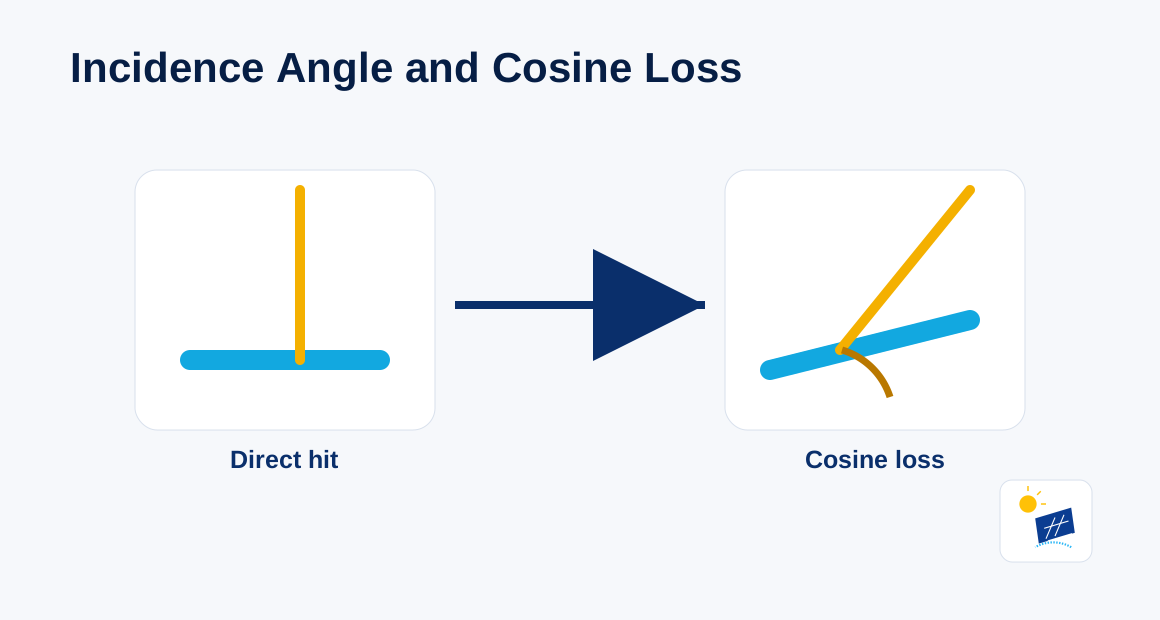
A low incidence angle means sunlight reaches the panel surface more directly.
Direct sunlight alignment happens when the sun is closer to the panel's perpendicular line. The panel face is then more square to the incoming beam. This condition is easier to understand with a simple surface example: light hitting a table from straight above is more direct than light skimming across the table from the side.
Low incidence angle is not the same as high solar elevation. A high sun can still meet a poorly directed panel at a weaker angle. A lower sun can align better with a steep panel during some winter or morning conditions. The panel surface and sun position define the relationship together.
What is a high incidence angle?
A high incidence angle means sunlight reaches the panel surface at a shallow angle.
Shallow light spreads across the panel face from the side rather than meeting it squarely. High incidence angle is common when the sun is low, when the panel faces away from the sun's azimuth, or when the panel tilt is poorly matched to the seasonal path.
High incidence angle also interacts with shade and surface losses, but it is not the same as shade. Shade blocks light. Incidence angle describes the geometry of light that reaches the surface. A good article or calculator keeps those two constraints separate.
How does incidence angle relate to plane-of-array irradiance?
Incidence angle relates to plane-of-array irradiance because the module plane receives sunlight according to surface alignment and available solar resource.
Plane-of-array irradiance describes irradiance on the tilted panel plane rather than on a generic horizontal surface. PVWatts includes plane-of-array irradiance among its modeled output fields. The model uses more than incidence angle alone, but panel orientation and sun position are part of the physical setup.
For a user, plane-of-array thinking explains why tilt and azimuth are entered separately. A roof surface is not only a roof. It is the plane where the modules sit. Incidence angle is one geometry layer used to understand how sunlight reaches that plane.
How does roof pitch affect incidence angle?
Roof pitch affects incidence angle when solar panels are flush-mounted because the roof slope becomes the panel tilt.
A 20 deg roof and a 40 deg roof create different panel surfaces. If both roofs face the same direction, the panel tilt still changes the incidence relationship. If both roofs have the same Roof Pitch but different directions, azimuth changes the incidence relationship.
Flat roofs and ground mounts create more control. Racks can set tilt and direction, but racking also changes wind exposure, attachment design, row spacing, and access. The best roof pitch is therefore a geometry fit plus a mounting constraint, not a universal number.
How does incidence angle relate to shade?
Incidence angle and shade are separate constraints, but both depend on the sun's position.
Incidence angle describes the direction of sunlight reaching an unshaded surface. Shade describes whether an obstruction blocks that sunlight before it reaches the surface. A panel can have a favorable incidence angle and still lose exposure when a tree, chimney, dormer, parapet, or nearby building blocks the sun.
Low solar elevation increases shade risk because shadows grow longer. That makes winter and early/late-day checks important. DOE Energy Saver guidance includes sunlight reaching the site as a planning factor.
What mistakes distort incidence-angle planning?
Incidence-angle mistakes include using tilt alone, using direction alone, and treating roof pitch as the final solar result.
Tilt alone cannot describe surface alignment because the panel direction still matters. Direction alone cannot describe surface alignment because the slope still matters. Roof pitch alone cannot describe surface alignment because the sun changes position by time and season.
Incidence angle also does not replace a performance model. PVWatts uses tilt, azimuth, array type, location, losses, and solar-resource data for modeled results. Incidence angle explains geometry, while production modeling adds weather and system assumptions.
How do you use incidence angle in solar planning?
Use incidence angle to understand why the best panel angle depends on tilt, azimuth, season, and location together.
A practical workflow starts with the panel surface. Measure panel tilt or roof pitch. Measure panel azimuth or roof direction. Use location, date, and time to understand sun zenith and azimuth. Compare the surface with the moving sun path, then check shade.
Incidence angle gives the physics behind solar orientation decisions. The user-facing decision still comes back to measured roof surfaces, mount type, shade timing, and installer review.
Sources: NASA POWER Solar Data · US DOE Solar Energy Technologies