Does solar panel angle matter?
Solar panel angle matters because tilt changes the panel's alignment with the sun path. The effect depends on latitude, season, roof pitch, azimuth, shade, and mount type.
Solar panel angle is measured from horizontal. NREL PVWatts uses tilt as a PV input with valid values from 0 deg to 90 deg. That input exists because panel slope changes how the array receives sunlight across the day and year.
Angle matters as a planning variable, not as a standalone answer. A panel with a reasonable angle can still underperform expectations when it faces the wrong compass direction or sits behind shade. A panel with an imperfect angle can still be practical when the roof pitch is fixed, the roof is unshaded, and changing the angle would add more installation risk than benefit.
Why does solar panel angle matter physically?
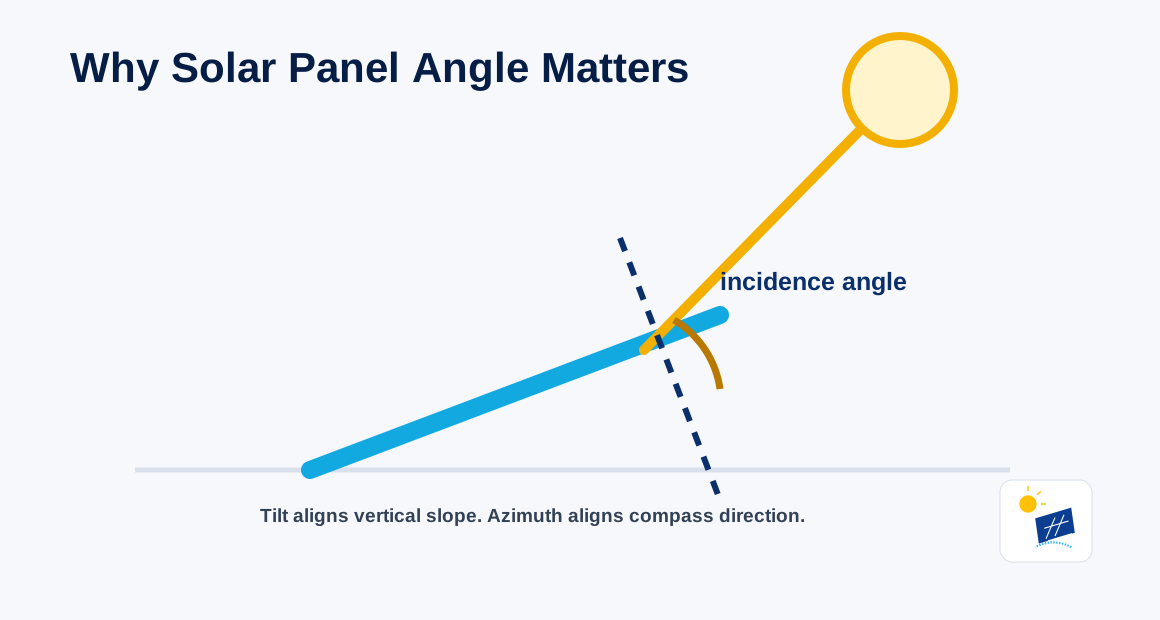
Solar panel angle matters physically because tilt changes the incidence angle between sunlight and the panel face. Better alignment reduces the mismatch between the sun path and the module surface.
Solar Incidence Angle is the angle between incoming sunlight and the line perpendicular to the panel face. NREL Solar Position Algorithm includes incidence-angle calculation for a tilted surface with horizontal and vertical orientation. That is the physical reason tilt belongs in solar planning.
How does incidence angle explain the effect?
Incidence angle explains the effect by connecting panel slope to direct sunlight alignment. A lower incidence angle means sunlight strikes the module more directly. A higher incidence angle means sunlight reaches the surface more obliquely. Tilt changes that relationship across the day and season.
How does solar elevation change the effect by season?
Solar Elevation Angle is the sun's height above the horizon. NOAA Solar Calculator provides solar elevation and azimuth outputs by place, date, and time. Summer sun is higher, so flatter tilt works better for the season. Winter sun is lower, so steeper tilt works better for the season.
The seasonal rule follows that mechanism. Fixed tilt equals latitude. Summer tilt equals latitude - 15 deg. Winter tilt equals latitude + 15 deg. Those settings are planning values, not guaranteed installation instructions.
When does angle matter less than roof direction or shade?
Angle matters less than roof direction or shade when sunlight misses the array because of compass orientation or obstruction. A good tilt cannot fix a roof plane with poor sunlight access.
Solar Panel Orientation is the compass-direction side of the panel face. NREL PVWatts uses azimuth as a PV input with valid values from 0 deg to less than 360 deg. Tilt answers slope. Azimuth answers direction. A complete solar orientation result needs both.
Shade can dominate both. DOE guidance states that solar potential depends on how much sun reaches the site. Trees, chimneys, dormers, ridgelines, vents, and nearby buildings can block the sun path. A precise angle on a shaded roof remains limited.
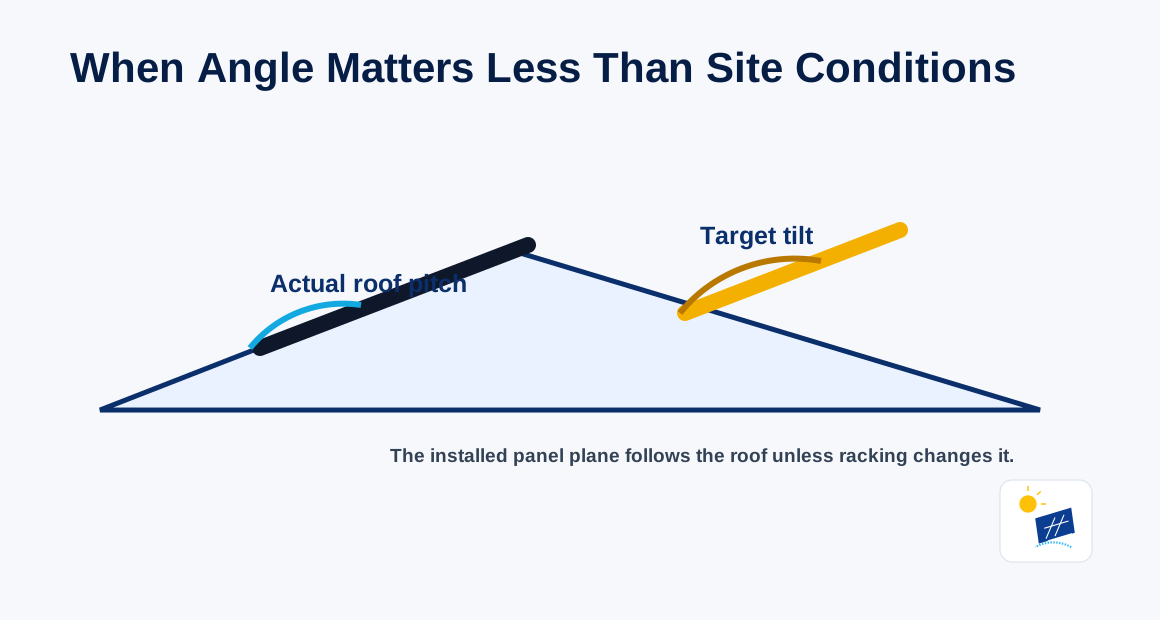
Roof Pitch also changes the practical answer. A flush-mounted panel follows the roof plane. A 40 deg target on a 25 deg roof becomes a 25 deg installed angle unless tilt racking changes the panel plane. Tilt racking adds wind, structure, waterproofing, access, and row-spacing questions.
When does angle matter more than usual?
Angle matters more than usual when the panel is very flat, the site has strong winter priority, the latitude is high, or the mount is adjustable enough to use seasonal settings.
Very flat panels create two separate concerns. First, they can sit far from the annual latitude target in many locations. Second, they can collect dust, pollen, leaves, and other surface material more easily than steeper panels. NREL PVWatts includes monthly soiling inputs because material on the array reduces incident irradiance. Soiling does not make tilt the only concern, but it shows why a flat angle is not just a geometry question.
Winter priority also makes tilt more visible. Winter sun stays lower in the sky, so a steeper panel faces the season's solar path more directly. The same roof that feels close enough for annual planning can be less aligned for winter planning. This matters for users comparing seasonal angles, cabins, remote loads, or any case where winter sunlight is the main planning concern.
High-latitude sites increase the angle conversation because the baseline tilt is steeper and the seasonal swing is larger. A low-latitude site can have a flatter target, while a high-latitude site often pushes winter tilt into steep values that need stronger physical review. The geometry and the mount constraints rise together.
Adjustable mounts make angle matter because the user can act on the result. A fixed roof does not change just because the seasonal value changes. A ground rack or adjustable pole mount can use a seasonal value when safe access and hardware design allow it.
How much does angle matter for fixed, seasonal, and roof-mounted systems?
Angle matters differently by system type. Fixed systems need a strong annual compromise, seasonal systems use adjusted targets, and roof-mounted systems often accept roof pitch as the practical tilt.
NREL PVWatts separates fixed open rack, fixed roof mounted, 1-axis, 1-axis backtracking, and 2-axis array types. That separation matters because a fixed roof array, adjustable ground mount, and tracker do not use angle in the same way.
Fixed systems use one angle for the full year. The latitude baseline gives a simple annual compromise. Seasonal systems shift angle between summer and winter. Monthly systems use more steps but require access and maintenance. Roof-mounted systems often use roof pitch because the roof plane controls the installed angle.
Trackers are different. A 1-axis or 2-axis tracker moves instead of using one manual tilt. For trackers, the angle question becomes a tracking-geometry question rather than a fixed-tilt question.
What signs show the panel angle needs review?
Panel angle needs review when the roof pitch differs greatly from latitude, the array is flat in a snowy or dusty location, the winter angle is a priority, or the mount can adjust safely.
A large roof-pitch mismatch is the first sign. A 45 deg latitude target and a 15 deg low-slope roof create a large angle gap. A steep winter target on a low roof creates another gap. These gaps do not automatically require racking, but they deserve comparison.
Soiling and snow are another sign. NREL PVWatts includes monthly soiling inputs that reduce incident irradiance. Very flat panels can collect dust, pollen, leaves, and debris. Winter panels in snowy regions need surface-cover and access review.
Another sign is repeated seasonal priority. A user who cares about winter alignment, off-grid winter charging, or seasonal adjustment needs more than one annual angle. The site still needs safe access and hardware designed for adjustment.
Angle also needs review when the search result and roof condition disagree. A calculator can return 38 deg for a location, while the actual roof is 18 deg. That difference does not automatically mean the roof is bad, but it changes the question. The next step is comparing the roof plane with azimuth, shade, local wind conditions, panel spacing, attachment method, and roof condition.
Review is also useful when a flat roof uses low-profile racking. Low-profile racks can reduce wind exposure and spacing conflicts, but they can sit below the latitude target. A steeper rack can align better with the sun path but needs more row spacing to avoid one row shading the next. This is a horizontal-depth issue behind the simple query "does angle matter?" The real query is often "when does changing angle create a new site constraint?"
Another sign is confusion between tilt and direction. If the user asks whether panels need to face south but also asks for the best angle, the answer needs both entities. Direction decides where the panel points across the compass. Tilt decides how steeply the panel rises from horizontal. A complete review keeps both values separate and then checks shade.
What is the practical next step after angle review?
The practical next step after angle review is to calculate the location-based tilt, compare it with roof pitch, check azimuth, inspect shade, and use a performance model for PV estimates.
PVWatts uses tilt, azimuth, location, array type, losses, and weather data. Angle review gives one part of that input set. A full PV estimate needs the rest of the model.
DOE guidance identifies contractor or installer assessment as necessary because online tools do not capture every site-specific variable. That review is where roof structure, local code, mounting hardware, roof condition, setbacks, shade, and access enter the decision.
Solar panel angle matters most when it is evaluated with the entities around it: latitude, season, roof pitch, azimuth, incidence angle, shade, mount type, and site review. It matters least when treated as a universal number without context.
The practical review can stay simple. First, calculate the latitude-based fixed angle. Second, identify whether the user needs fixed, summer, winter, seasonal, monthly, roof, or tracker logic. Third, measure or estimate the actual roof pitch if the system is roof-mounted. Fourth, check azimuth so the panel direction is known. Fifth, look for shade sources across the sun path. Sixth, use Solar Panel Angle Loss only after the physical inputs make sense.
That sequence answers the main query and the query behind it. The visible query is "does solar panel angle matter?" The hidden query is "when is the angle worth changing, and when is another constraint more important?" Angle matters because it controls sunlight alignment. It stops being the main lever when roof plane, direction, shade, access, or installation limits dominate the result.
Use the site calculator after this page when you need a location-specific planning result.
Source Notes
- C001-C006: NREL PVWatts V8 documents tilt, azimuth, location, array type, output fields, and soiling inputs.
- C008: NREL Solar Position Algorithm includes incidence-angle calculation for tilted surfaces.
- C009: NOAA Solar Calculator provides solar elevation and azimuth by place, date, and time.
- C010-C011: DOE Energy Saver explains site sunlight and site assessment limits.
- C013: Site methodology defines fixed, summer, and winter tilt formulas.