What is roof orientation for solar panels?
Roof orientation is the direction a roof plane faces, measured as azimuth in degrees from true north.
PVWatts uses azimuth as a separate input with a 0 deg to less than 360 deg range. In that north-clockwise convention, north is near 0 deg or 360 deg, east is near 90 deg, south is near 180 deg, and west is near 270 deg.
Roof orientation is not roof pitch. Pitch measures slope. Orientation measures compass direction. A roof can have the same pitch on multiple planes while each plane faces a different part of the sun path.
Why does roof orientation matter?
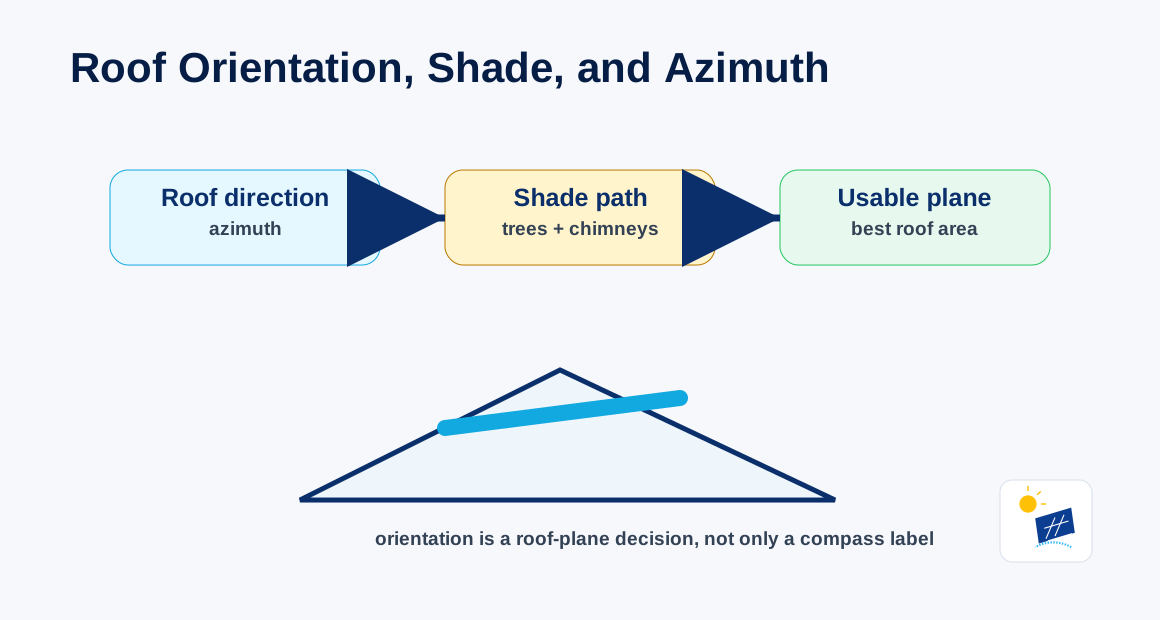
Roof orientation matters because it controls which part of the daily sun path the panel surface faces.
A south-facing roof in the Northern Hemisphere often aligns with the central daily sun path. East-facing roofs emphasize morning exposure. West-facing roofs emphasize afternoon exposure. North-facing roofs in the Northern Hemisphere usually point away from the main fixed-panel arc.
Solar orientation also determines shade timing. A tree east of a roof affects morning exposure. A tree west of a roof affects afternoon exposure. A southern obstruction in the Northern Hemisphere can affect the strongest middle part of the day. Orientation makes shade a time-specific problem.
What roof orientation is best for solar panels?
The best roof orientation is usually the equator-facing roof plane with low shade, usable pitch, adequate area, and safe mounting conditions.
In the Northern Hemisphere, the equator-facing direction is True South. In the Southern Hemisphere, the equator-facing direction is true north. NASA's season explanation shows how Earth's tilt creates opposite hemisphere geometry, and solar orientation follows that same north-south relationship.
The best orientation is not a compass label alone. A true-south roof with heavy shade can be weaker than a clear southeast or southwest roof. A roof with strong direction but poor surface condition can be less practical than another roof plane. The practical answer is measured and site-specific.
How do true north and magnetic north affect roof orientation?
Solar roof orientation uses true direction, not magnetic direction, because solar position is tied to geographic coordinates.
A compass often reads magnetic north. Solar Azimuth uses true north in common calculator conventions. Magnetic declination is the difference between the two. If a user enters a magnetic compass reading into a true-azimuth calculator, the direction can be shifted.
This distinction matters most when the roof is near a decision boundary. A roof described as southeast, south, or southwest can move meaningfully after correction. A roof-orientation result needs true azimuth before comparing surfaces.
How do you measure roof orientation?
Roof orientation is measured by finding the true azimuth of the roof plane.
A roof plane's azimuth is the direction perpendicular to the roof face, pointing outward from the panel surface. Satellite imagery, roof plans, compass tools with declination correction, or installer measurements can identify the value. The result is best recorded in degrees, not only as a broad direction label.
Broad labels hide important differences. A roof at 135 deg is southeast. A roof at 170 deg is nearly south. A roof at 225 deg is southwest. All three are different panel surfaces even when a homeowner calls them "south side."
How does roof pitch change orientation value?
Roof pitch changes orientation value because a steeper roof points the panel face more strongly toward its azimuth.
A low-slope roof has less directional emphasis than a steep roof. A steep east-facing roof strongly favors morning exposure. A steep west-facing roof strongly favors afternoon exposure. A steep north-facing roof in the Northern Hemisphere points more strongly away from the main sun path.
PVWatts separates tilt and azimuth because direction and slope combine to define the array plane. Orientation without pitch is incomplete. Pitch without orientation is incomplete.
How do east, west, south, and north orientations compare?
East, west, south, and north orientations compare by the part of the sun path they face.
South-facing roofs in the Northern Hemisphere often align with the middle of the daily sun path. East-facing roofs emphasize morning sun. West-facing roofs emphasize afternoon sun. North-facing roofs in the Northern Hemisphere usually point away from the main fixed-panel arc.
The comparison changes in the Southern Hemisphere because true north becomes the equator-facing direction. East and west still describe timing. East means morning emphasis. West means afternoon emphasis. The north-south preference changes because the sun path sits on the opposite side of the sky.
How does roof area affect orientation?
Roof area affects orientation because the best-facing roof plane still needs enough usable surface for panels.
A strong azimuth with vents, skylights, chimneys, dormers, or small roof sections can be less practical than a slightly weaker orientation with more open surface. Usable area includes setbacks, access paths, fire code clearances, roof equipment, and structural layout.
Roof area also determines whether multiple orientations are practical. Some homes use panels on southeast and southwest roof planes because no single roof plane has enough clear area. A calculator can evaluate each plane separately, but final layout needs a full roof review.
What data belongs in a roof orientation check?
A roof orientation check needs true azimuth, roof pitch, shade timing, usable area, hemisphere, and mount type.
True azimuth identifies direction. Roof Pitch identifies the tilt for flush panels. Shade timing identifies whether sunlight reaches the panel plane. Usable area identifies whether the roof can fit an array. Hemisphere identifies whether north or south is the equator-facing direction.
This data set prevents the common mistake of judging a roof by one label. "South roof" is not enough. "South roof, 28 deg pitch, low shade, enough clear area, true azimuth 185 deg" is a solar surface.
How does shade change roof orientation value?
Shade changes roof orientation value because the best compass direction loses value when sunlight cannot reach the panels.
DOE Energy Saver guidance identifies sunlight reaching the site as part of solar planning. A roof facing a strong solar direction can be weakened by trees, chimneys, dormers, parapets, terrain, or neighboring buildings.
Shade also has direction. Morning shade affects east-facing roofs. Afternoon shade affects west-facing roofs. Winter shade often stretches farther because the sun path is lower. A roof orientation check needs shade timing, not only annual compass direction.
How does roof orientation differ by hemisphere?
Roof orientation differs by hemisphere because fixed panels generally face the equator-side sky.
Northern Hemisphere roofs generally use true south as the fixed-panel reference. Southern Hemisphere roofs generally use true north. East and west keep their time-of-day meanings in both hemispheres, but the north-south preference changes.
A global calculator or article has to state hemisphere because "north-facing" has opposite meanings across hemispheres. North Facing Solar Panels are usually constraint cases in the United States. North-facing panels can be preferred in Australia, South Africa, and parts of South America.
What mistakes distort roof orientation decisions?
Roof orientation mistakes include using magnetic direction, ignoring pitch, ignoring shade, and treating one roof plane as the whole house.
Many homes have several roof planes. One plane can face southeast, another southwest, and another north. The best surface is the one with the strongest complete geometry, not the roof label used in casual conversation.
A second mistake is using a phone compass without checking true north settings. A third mistake is entering roof pitch into the azimuth field or azimuth into the tilt field. Solar calculators stay useful only when each measured value goes into the correct input.
How do you use roof orientation in a calculator?
Use roof orientation in a calculator by entering the true azimuth of the panel-facing roof plane.
For flush-mounted panels, the roof azimuth becomes the panel azimuth. For a rack on a low-slope roof, the rack direction can become the panel azimuth instead. The calculator also needs tilt, location, season or month, and mount type when those fields are available.
The result is an orientation estimate, not a full installation design. Roof condition, structural limits, electrical layout, fire setbacks, and local permitting still require site review.
Sources: NOAA Solar Calculator · US DOE Solar Energy Technologies